Kenya and the Future of Global Health Security: Balancing Sovereignty, Preparedness, and Solidarity in the Wake of the Ebola Outbreak

Operationalizing 7-1-7 : Kenya’s shift from metrics and timelines to Decision Intelligence
April 10, 2026
From Detection to Decision: How Kenya is Transforming Public Health Emergency Response with Artificial Intelligence
July 21, 2026
Prof. Mark Nanyingi | Nairobi-Kenya| April 29 2026- 00:00
Why preparedness, trust, and international cooperation must coexist in managing emerging epidemic threats
An infected traveler crosses a border seeking treatment. A healthcare worker dies from an unexplained fever. Days later, multiple districts begin reporting suspected cases of a highly infectious disease. Before laboratory confirmation is completed, transmission chains have already spread across communities, transport corridors, and international borders.
This is how epidemics become global threats not simply because pathogens move quickly, but because detection, coordination, and response systems often move too slowly.
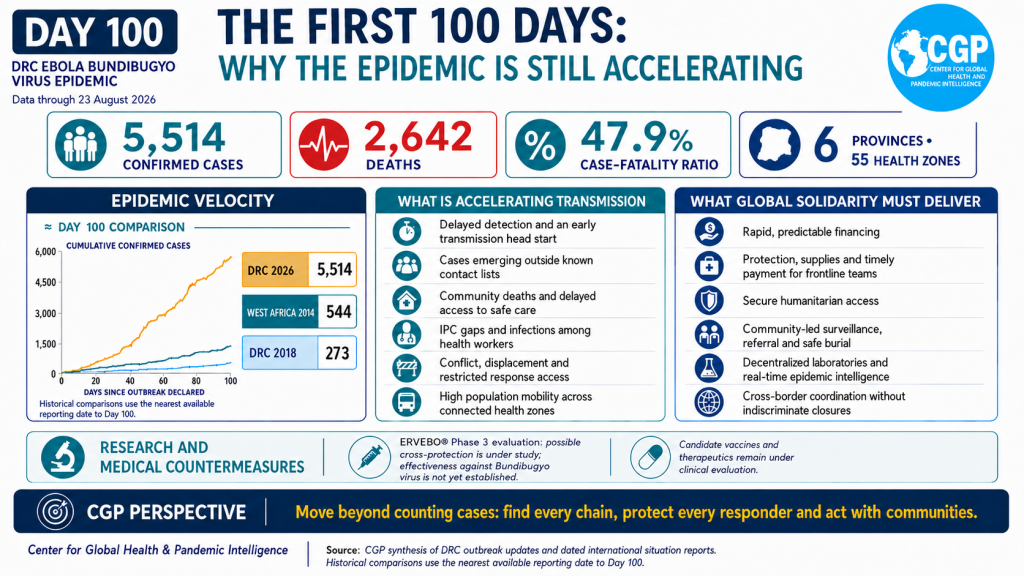
The ongoing Bundibugyo Virus Disease (BVD) outbreak in the Democratic Republic of Congo (DRC) and Uganda is a stark reminder that epidemic preparedness can no longer be viewed as a purely national undertaking. As of 24 May 2026, the DRC had reported 906 suspected cases and 223 suspected deaths, while laboratory investigations had confirmed 105 cases and 10 deaths across 13 affected health zones in Ituri, North Kivu, and South Kivu provinces. Uganda had additionally confirmed seven linked or imported cases, including one death.
The outbreak continues to expand geographically, driven by delayed detection, incomplete contact tracing, population mobility, mining-linked transmission corridors, and cross-border movement. WHO has assessed the risk as very high in affected countries and high at the regional level.
Recognizing the severity of the outbreak, the World Health Organization declared it a Public Health Emergency of International Concern (PHEIC), while Africa CDC designated it a Public Health Emergency of Continental Security (PHECS). These declarations reflect a growing recognition that outbreaks emerging in one part of the world can rapidly become threats to regional stability, economic resilience, and international security.
Against this backdrop, Kenya finds itself at the center of an important conversation about the future of global health security.

Kenya’s Emerging Role in Regional Epidemic and Pandemic Preparedness
Kenya occupies a uniquely strategic position within Africa’s public health architecture. As a regional transport hub, diplomatic center, humanitarian logistics gateway, and economic powerhouse, Kenya serves as a critical node connecting Eastern, Central, and Horn of Africa countries. The country hosts major international organizations, regional disease surveillance networks, emergency response assets, and advanced public health institutions.
This strategic position makes Kenya both an asset and a responsibility within regional preparedness efforts. The latest WHO operational readiness assessments categorize Kenya among the highest-priority countries for Ebola preparedness because of its connectivity, population movement patterns, and central role in regional health security coordination.
Importantly, preparedness should not be confused with disease presence. The strengthening of isolation facilities, points-of-entry screening, laboratory systems, emergency operations centers, and healthcare worker readiness does not indicate active transmission within Kenya. Rather, it reflects recognition that preparedness must be established before emergencies occur. COVID-19 taught the world a costly lesson: preparedness delayed is preparedness denied.
Understanding the Debate around Health Security and Sovereignty
Recent reports regarding a proposed U.S.-supported Ebola quarantine and treatment arrangement in Kenya have sparked vigorous public debate.The subsequent decision by the Kenyan High Court to temporarily suspend implementation pending judicial review has further amplified discussions around sovereignty, constitutional oversight, transparency, public participation, and national interest.
These concerns are neither irrational nor anti-science.They reflect legitimate questions that democratic societies must ask whenever international health arrangements intersect with national governance structures.Public health emergencies require urgent action, but they also require public trust. Preparedness initiatives that lack transparency risk generating resistance, misinformation, and public anxiety, even when their underlying objectives are well-intentioned.
The lesson here is not that preparedness and sovereignty are competing interests.Rather, effective preparedness depends upon sovereign institutions functioning transparently, lawfully, and with public confidence. Trust is itself a preparedness asset.
The U.S.-Kenya Partnership in a New Global Health Security Era
This partnership entered a new phase following the recent call between U.S. Secretary of State Marco Rubio and President William Ruto. According to the U.S. Department of State, the United States intends to commit US$13.5 million toward Kenya’s Ebola preparedness efforts and has already committed US$112 million in bilateral assistance to support the broader regional Ebola response.These commitments reflect a growing understanding that protecting populations at home increasingly depends on strengthening preparedness abroad
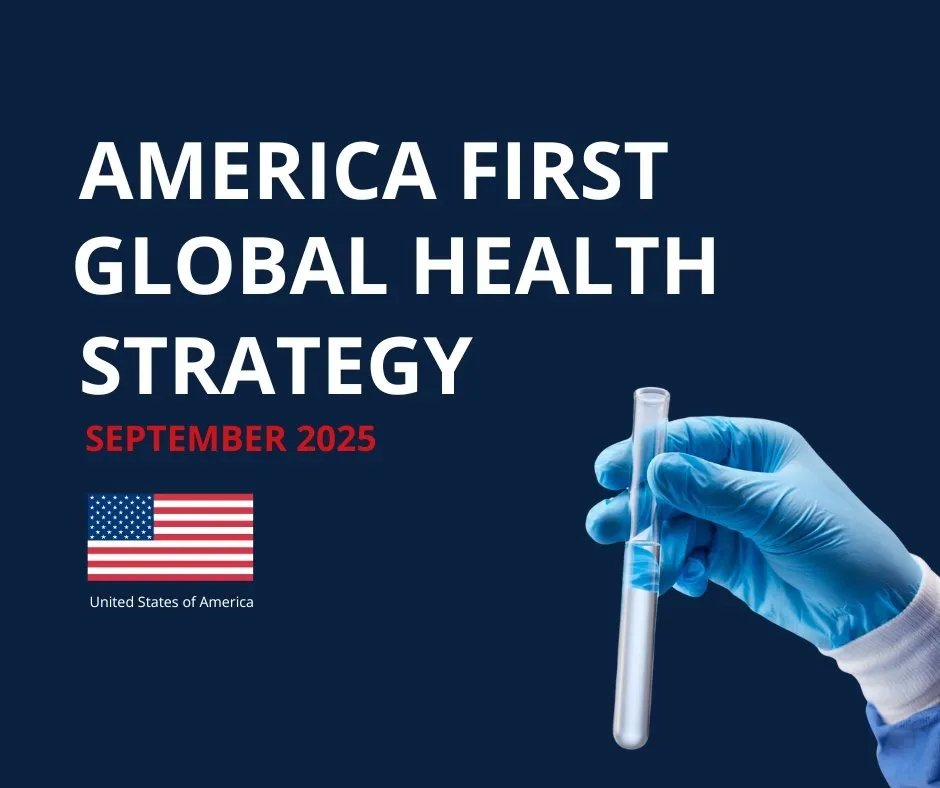
“This principle lies at the heart of the evolving America First Global Health Security Agenda,” Dr. Nanyingi
Contrary to common misconceptions, modern health security strategies are not necessarily inward-looking. Rather, they recognize that preventing outbreaks from spreading internationally often requires investment at the source, strengthening surveillance systems, laboratories, preparedness infrastructure, and response capabilities in regions where emerging threats are most likely to occur. In an interconnected world, national security and global health security are increasingly inseparable.
From Delayed Detection to Predictive Preparedness
detection remains one of the greatest vulnerabilities in global health security. The outbreak continues to reveal how surveillance gaps, delayed laboratory confirmation, incomplete contact tracing, and fragmented information systems can allow transmission chains to expand before response measures fully mobilize.
This is why the 7-1-7 target has gained increasing prominence globally:
- Detect a suspected outbreak within 7 days;
- Notify and investigate within 1 day;
- Initiate an effective response within 7 days.
The framework is deceptively simple but profoundly important. Every missed signal, delayed alert, or fragmented data stream creates an opportunity for transmission to continue unchecked. The future of preparedness will therefore depend not only on faster response, but on earlier detection.
Artificial Intelligence , Epidemic Intelligence, and the Decision Making for Public Health Emergencies (DMT-PHE)
The current outbreak also illustrates the growing importance of epidemic intelligence and digital decision-support systems.Modern outbreaks generate enormous volumes of epidemiological, laboratory, mobility, environmental, and operational data. The challenge is no longer merely collecting information, it is transforming information into actionable intelligence quickly enough to inform decisions.
This is where emerging tools such as the Decision-Making Tool for Public Health Emergencies (DMT-PHE) AI Assistant offer important possibilities. The DMT-PHE AI Assistant represents a new generation of AI-enabled public health decision-support systems designed to strengthen situational awareness, integrate multisource surveillance signals, support risk assessment, and accelerate evidence-informed decision-making.
Such capabilities can help: Identify unusual epidemiological patterns earlier; Harmonize information across surveillance systems; Support operational prioritization; Enhance cross-border intelligence sharing; Generate real-time decision support; Improve preparedness planning and resource allocation.
Importantly, AI is not a replacement for public health expertise. Rather, it serves as a force multiplier, helping public health professionals process complexity, identify risks sooner, and respond more effectively. In an era where outbreaks increasingly move faster than traditional reporting systems, intelligent decision-support tools may become as important as laboratories and treatment centers.
One Health and the Next Generation of Health Security
The Ebola outbreak also reinforces another critical lesson: epidemic preparedness cannot be separated from the broader ecological context in which diseases emerge. Mining-linked mobility corridors identified during the current outbreak illustrate how human behavior, environmental disruption, economic activity, and infectious disease transmission are deeply interconnected.
This is the essence of the One Health approach. Preventing future outbreaks requires integrated surveillance and action across: Human health systems; Animal health systems; Environmental monitoring; Climate intelligence; Genomic surveillance; Community-based early warning systems. No country can effectively manage emerging epidemic threats through a single-sector approach. The future of health security will increasingly depend on how effectively these systems work together.
A Shared Responsibility in an Interconnected World
The current Ebola outbreak is more than a regional public health event. It is a reminder that preparedness, sovereignty, trust, technology, and international cooperation are now inseparable components of modern health security.
Kenya’s National Action Plan for Health Security II (NAPHS II), the national Ebola Preparedness and Response Plan, and the country’s growing investments in surveillance, emergency preparedness, and One Health coordination provide a strong foundation for navigating these challenges. The question facing Kenya and indeed the world is no longer whether another epidemic will emerge.
The question is whether countries can build systems capable of detecting threats earlier, responding faster, and working together more effectively when they do. In an interconnected world, preparedness, sovereignty, and international cooperation must not compete with one another.They must reinforce one another.That may be the most important lesson of the current Ebola outbreak and perhaps the most important investment we can make in preventing the next one.

Prof. Mark Nanyingi is an infectious disease epidemiologist, and global health security expert. He serves as Technical Director for Global Health Security at the Center for Global Health and Pandemic Intelligence (CGP) and is an Ass. Professor of Global Health at the Center for Global Health Equity at the University of Michigan. His work focuses on One Health, epidemic intelligence, pandemic preparedness, surveillance systems, and AI-enabled decision support for public health emergencies