Kenya advances One Health and Pandemic Preparedness with Launch of Rift Valley Fever Contingency Plan and Human Brucellosis Testing Guidelines

One Health in Action: Building Multidisciplinary Bridges for Improved Global Health Security and Pandemic Preparedness
October 30, 2025
Leveraging One Health to Strengthen Pandemic Preparedness in Kenya
November 9, 2025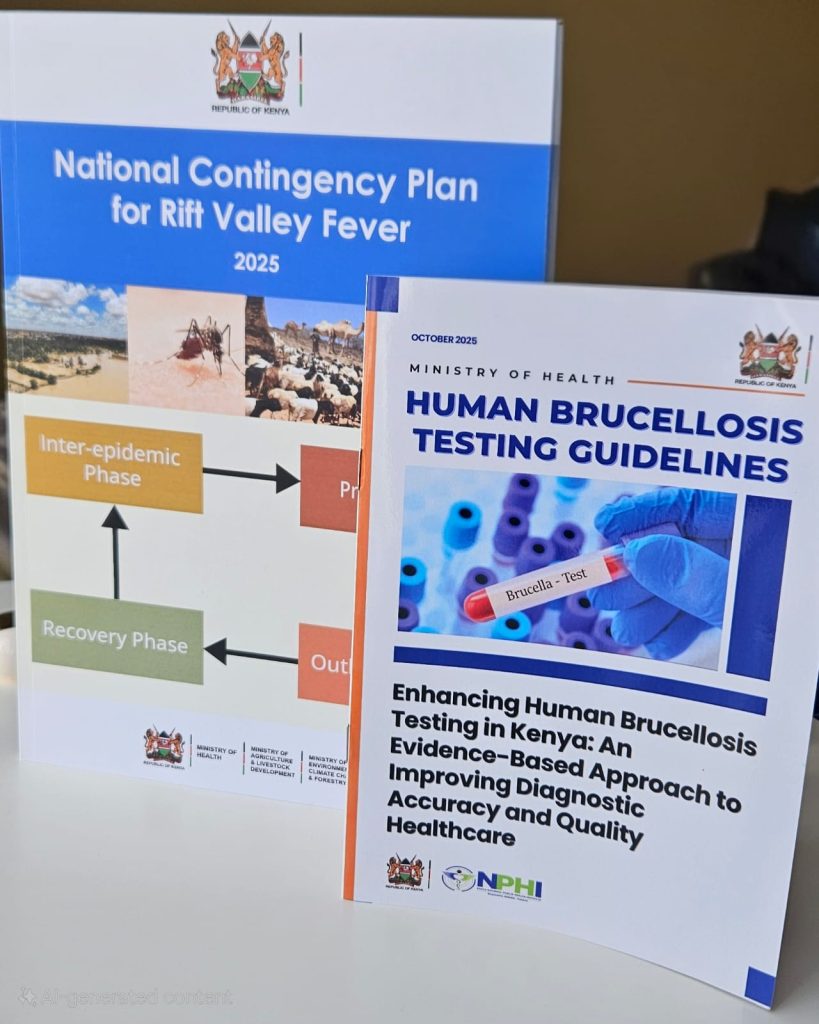
Nairobi, Kenya- Nov 5, 2025
“Standardizing surveillance and diagnostics for priority zoonoses is a critical step toward faster detection, earlier response, and reduced outbreak impact, and the emergence of epidemics and pandemics.” Dr. Mark Nanyingi, (CGP)
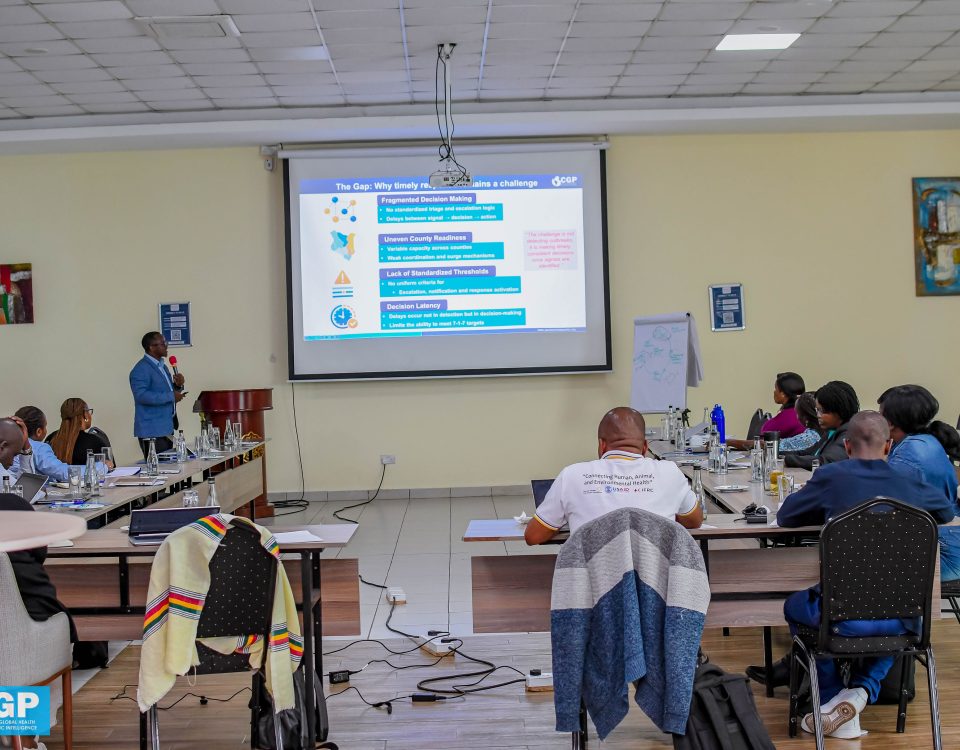
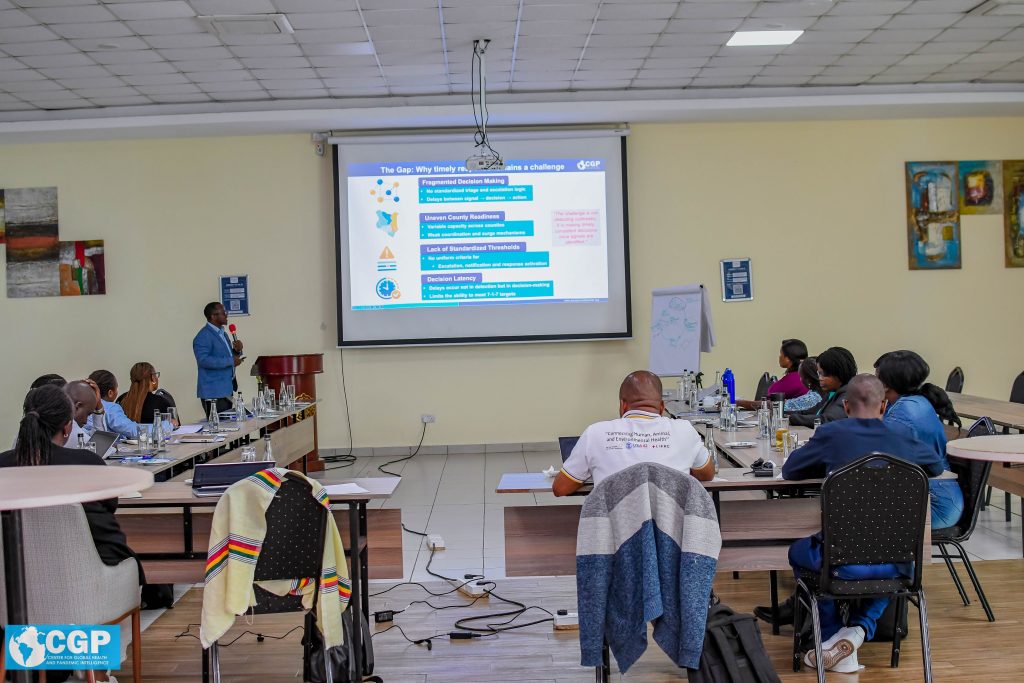
Kenya has taken a significant step forward in strengthening its national systems for early detection and coordinated response to zoonotic diseases with the official launch of two strategic public health frameworks: the National Contingency Plan for Rift Valley Fever (2025) and the Human Brucellosis Testing Guidelines. The launch event, convened by the Zoonotic Disease Unit (ZDU) under the joint leadership of the Ministry of Health, the Ministry of Agriculture & Livestock Development, and the Ministry of Environment, Climate Change & Forestry, Kenya National Public Health Institute (KNPHI) brought together national agencies, 19 county representatives, laboratory networks, research institutions- Kenya Medical Research Institute, International Livestock Research Insitute and international partners including the Center for Global Health and Pandemic Intelligence (CGP), Washington State University (WSU), Amref Health Africa- Kenya, University of Liverpool, University of Nairobi.
These national frameworks represent a major advance in Kenya’s One Health and pandemic preparedness agenda, providing national and county-level actors with standardized procedures, clear decision-support tools, and a shared operational language for tackling zoonotic threats with epidemic and socio-economic impact.
Why These Frameworks Matter Now?
Rift Valley Fever (RVF) and human brucellosis continue to pose persistent threats in Kenya, both epidemiologically and economically. RVF has caused multiple outbreaks since the 1930s, leading to loss of human life, mass livestock mortality, trade disruptions, and long-term livelihood impacts. Brucellosis, while less visible, remains one of the most underdiagnosed and underreported zoonoses in the region linked to chronic illness, reduced workforce productivity, and mismanaged antibiotic use.
Kenya’s vulnerability to zoonotic spillover is amplified by several factors:
– Expanding livestock–human interfaces
– Climate-driven flooding cycles affecting mosquito vector dynamics
-Informal livestock trading networks and cross-border movement
– Gaps in standard diagnostic capacity and data sharing
– Uneven outbreak readiness across counties
-Reliance on reactive rather than anticipatory response systems
The launch of the two frameworks signals a shift toward proactive, risk-based, multisectoral preparedness a core principle of the One Health approach, the International Health Regulations (IHR 2005), and the Africa CDC Regional Strategy for Health Security (2023–2027)
Inside the National Contingency Plan for Rift Valley Fever (2025)
The RVF Contingency Plan is a full-scale operational document designed to guide preparedness, detection, response, and recovery across human, animal, and environmental sectors. Its six key objectives include:
- Providing multisectoral coordination structures for RVF prevention, detection, and response
- Serving as a national and county-level reference tool for outbreak management
- Mapping and communicating risk factors and high-threat geographic hotspots
- Outlining actions for each phase of the outbreak cycle—from inter-epidemic period to recovery
- Supporting resource mobilization for preparedness and response
- Mitigating socio-economic and livelihood impacts on affected communities
The plan also lays out priority components including:
– Early warning systems leveraging weather and vector surveillance
– Diagnostic capacity-building and laboratory networking
– Standard triage and infection prevention protocols
– Vector control strategies
– Risk communication and community engagement pathways
– Incident command and emergency operations structures
Human Brucellosis Testing Guidelines- Strengthening Diagnostic Precision
The newly launched Human Brucellosis Testing Guidelines address long-standing gaps in diagnostic accuracy, case management, and national reporting. The guidelines:
1. Standardize laboratory testing algorithms and case definitions for all levels of the health system
2. Define specimen handling, biosafety, and transport requirements
3. Provide interpretation criteria for serology, culture, and PCR testing
4. Establish data reporting and notification pathways within IDSR
5. Harmonize human diagnostic systems with existing animal health surveillance structures
The guidelines are expected to reduce diagnostic delays and misclassification common barriers that have masked the true burden of brucellosis in Kenya and the region
CGP’s role in advancing evidence-based preparedness
The Center for Global Health and Pandemic Intelligence (CGP) provided technical assistance during the development of both documents contributing expertise in:
- Outbreak analytics and disease modelling
- Harmonization of human–animal surveillance systems
- Evidence reviews on diagnostic performance and feasibility
- Integration of One Health governance into public health emergency management
- County-level readiness assessments and policy translation
CGP’s contribution builds on more than a decade of technical work in zoonotic disease preparedness in Kenya, including:
- Support to RVF hotspot mapping and early warning systems
- Field research and diagnostic evaluation studies on brucellosis
- Capacity development for subnational public health emergency management through simulation exercises and AAR for RVF
- Technical inputs into the 7-1-7 readiness framework and NPHI strengthening
- Advisory support to Kenya’s Pandemic Fund proposals and multisectoral governance reforms
From Policy to Practice
The launch of these frameworks marks an important milestone, but implementation is now the real test. Success will depend on:
– Training and equipping county surveillance, veterinary, and laboratory teams
– Embedding digital reporting and early warning tools
-Strengthening multisectoral coordination platforms at county and national levels
-Mobilizing resources for operational rollout, particularly in high-risk regions
-Integrating lessons into Kenya’s broader pandemic preparedness roadmap
The frameworks also position Kenya to better align with future global and continental financing windows, including the Pandemic Fund. CGP remains committed to supporting the next phase: operationalization, digitization, capacity-building, and sustained evidence generation

1 Comment
Good work!