Kenya’s States Parties Self-Assessment Annual Reporting (SPAR 2025) signals a strategic shift in Health Security Preparedness

Strengthening Kenya’s Health Security through Validation of the National Action Plan for Health Security (NAPHS II)
February 5, 2026
Kenya Advances Public Health Emergency Response Systems through Validation of a Risk-Based Decision-Making Tool
February 20, 2026
“The SPAR 2025 process provided Kenya with a critical opportunity to reflect honestly on our preparedness strengths and system gaps. By linking assessment findings directly to NAPHS II implementation, we are strengthening national readiness through evidence-based prioritization and coordinated action across sectors.”
— Dr. Kanana Kimonye, Ag. Director, Emergency Preparedness and Response (EPR), Kenya National Public Health Institute (KNPHI)
Aligning SPAR with NAPHS II implementation to strengthen sustainable national preparedness systems.
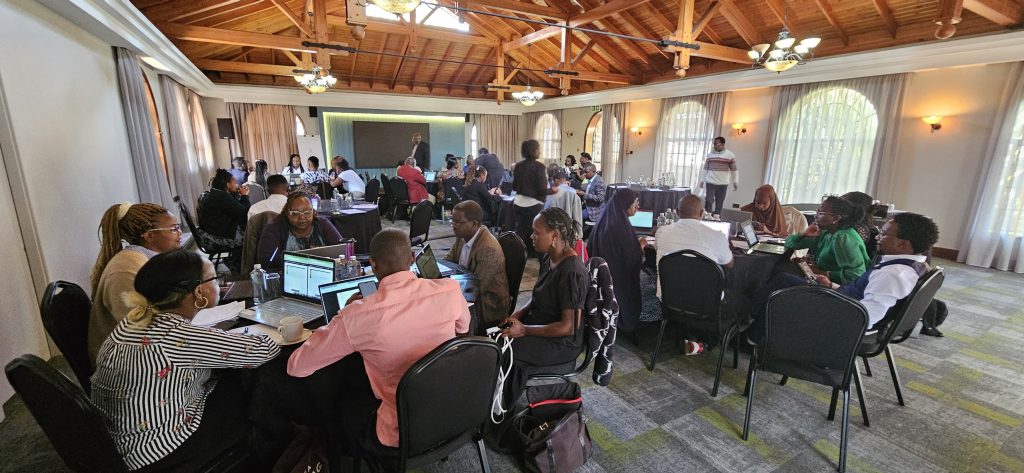
Feb 10 -12, 2026, Nairobi-Kenya
The Kenya National Public Health Institute (KNPHI) convened a three-day national stakeholders’ consultative workshop to undertake Kenya’s 2025 States Parties Self-Assessment Annual Reporting (SPAR), a core obligation under the International Health Regulations (IHR, 2005). The assessment brought together over 50 multidiscplinary experts from multisectoral institutions spanning government, academia, One Health actors, and emergency response partners to reflect on national preparedness performance and identify priority areas for action..
Kenya’s SPAR 2025 process marked an important transition from routine reporting toward strategic reflection on national preparedness performance. Rather than serving solely as an annual compliance exercise, the process enabled stakeholders to interpret assessment findings as decision-shaping insights for strengthening the country’s evolving health security architecture. Technical facilitation by the Center for Global Health and Pandemic Intelligence (CGP), Tackling Deadly Diseases Programme (TDDAP2) and WHO supported alignment between SPAR outcomes and the recently validated National Action Plan for Health Security II (NAPHS II), reinforcing a deliberate continuum between assessment, policy design, and implementation planning.).
Performance Trajectory of SPAR: Insights from 2024 to 2025
A comparative review of Kenya’s SPAR 2024 and SPAR 2025 assessments suggested several evolving trends across IHR core capacities. Improvements appeared most evident in governance coordination, infection prevention and control, and the institutionalization of simulation exercises and after-action learning reflecting sustained national preparedness reforms and alignment with NAPHS II planning processes.
However, the assessment also highlighted areas where scores appeared to have plateaued or declined. Financing mechanisms, laboratory system integration into routine monitoring frameworks, and cross-sectoral data harmonization remained persistent system constraints. Some changes also reflected stricter application of SPAR performance levels, where higher scores required fully institutionalized systems rather than partial implementation.
“Health security is not strengthened by assessments alone. It is strengthened when assessments shape decisions. SPAR 2025 served as a bridge between international reporting obligations and domestic system transformation.”
— Dr. Mark Nanyingi, Global Health Security, Center for Global Health and Pandemic Intelligence

Overall, the comparison signaled a transition from rapid capacity expansion toward consolidation where progress depended increasingly on sustainable financing, workforce institutionalization, and integrated One Health governance.
Nexus of NAPHS II and SPAR 2025
CGP and KNPHI underscored the SPAR as a strategic self-assessment tool that directly informed implementation and prioritization of Kenya’s National Action Plan for Health Security (NAPHS). The SPAR enabled the country to systematically identify strengths, gaps, and priority actions across IHR core capacities, guiding evidence-based investments and coordinated action to strengthen national preparedness, resilience, and response to public health emergencies.
Through its technical facilitation and analytical synthesis, CGP supported the alignment of SPAR findings with national planning processes, helping translate assessment outcomes into strategic insights that informed Kenya’s broader preparedness agenda. As countries increasingly seek to bridge global reporting frameworks with domestically driven implementation, integrated approaches linking assessment, policy design, and investment planning are becoming central to advancing sustainable health security systems.
The SPAR is WHO’s standardized mandatory annual self-assessment tool through which countries evaluated their capacities to prevent, detect, and respond to public health threats. It forms a critical component of the IHR Monitoring and Evaluation Framework (IHR MEF), alongside Joint External Evaluations (JEE), simulation exercises (SIMEXs), and after-action reviews (AARs).
System Signals Emerging from SPAR 2025
While SPAR indicators provide a quantitative snapshot of performance, deeper analysis of the assessment process points to underlying system dynamics influencing preparedness outcomes. The following signals reflect evolving governance maturity, financing realities, workforce stability, and multisectoral integration.
Governance Maturation
Kenya’s preparedness architecture showed signs of transitioning from project-based coordination toward more institutionalized national leadership structures aligned with NAPHS II (2026-2030).
Financing Fragility
Technical progress continued, but uneven financing mechanisms remained a critical bottleneck for advancing to higher performance levels.
Workforce Institutionalization
Sustained performance improvements increasingly depended on stable and well-trained public health workforce systems.
One Health Integration Trajectory
Cross-sectoral engagement strengthened, although climate-sensitive surveillance and environmental health indicators required further integration.
What this means for Kenya’s Preparedness Cycle

The SPAR 2025 findings indicate that Kenya’s preparedness journey has entered a new phase, one defined less by establishing structures and more by institutionalizing sustainable systems. Future gains are expected to depend on strengthening domestic financing pathways, deepening integration of laboratory and surveillance data ecosystems, and consolidating One Health coordination across sectors. By aligning SPAR insights with NAPHS II implementation, Kenya positions itself to move from incremental improvements toward more resilient, system-level preparedness outcomes.
The success of SPAR 2025 was enabled through strong multisectoral collaboration, under WHO’s overall technical guidance, and the active engagement of key national and international partners including the Council of Governors (CoG), the Ministry of Health (MoH), the Kenya Institute of Primate Research (KIPRE), the University of Nairobi, the Kenya Defence Forces (KDF), the Directorate of Veterinary Services (DVS), PATH, FHI360, Africa CDC, US CDC, the Kenya Red Cross (KRC), Amref Health Africa, and AFENET.