Kenya Launches NAPHS II and KNPHI Strategic Plan to Strengthen Epidemic Intelligence and Digital Public Health Systems

What the U.S “Advancing Global Health” Initiative Means for Africa’s Health Security and Sovereignty
March 10, 2026Dr. Mark Nanyingi | Nairobi-Kenya| March 27, 2026- 23:00
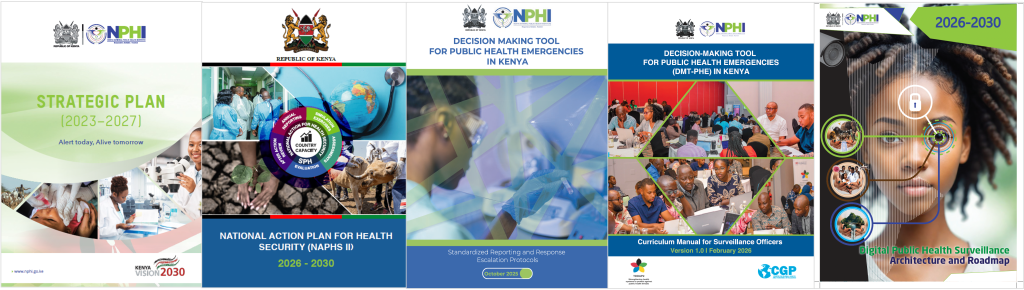
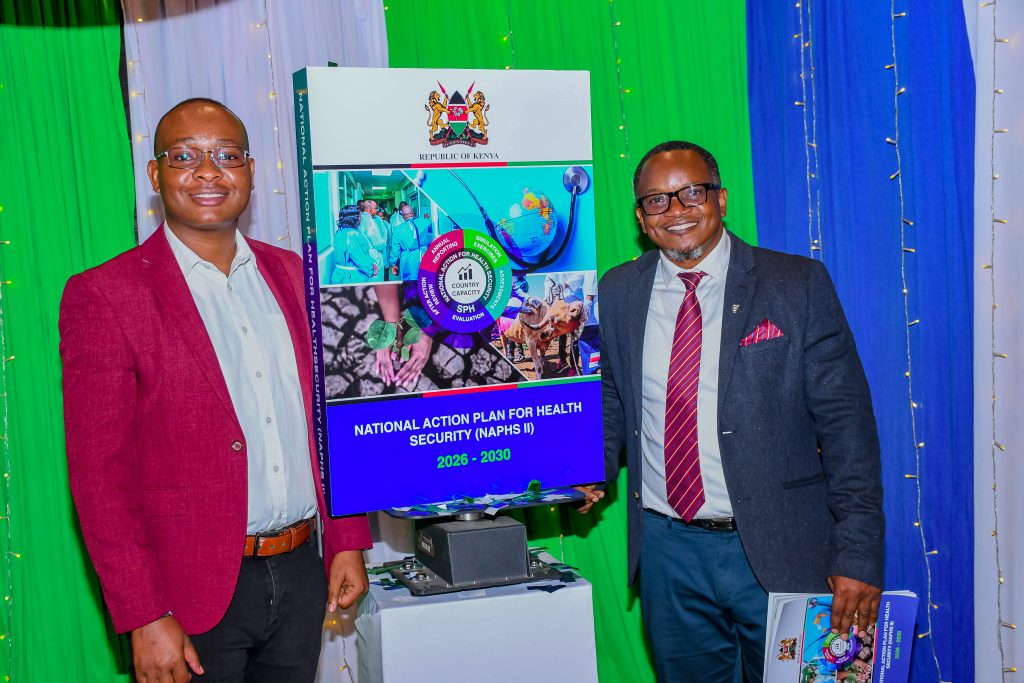
Kenya has reached a critical milestone in strengthening its national health security architecture with the launch of the Kenya National Public Health Institute (KNPHI) Strategic Plan 2026–2030 and the National Action Plan for Health Security (NAPHS II) 2026–2030. These frameworks establish a comprehensive blueprint for transitioning toward integrated, data-driven, and intelligence-led public health systems. The launch signals a decisive shift from fragmented and reactive approaches toward institutionalized epidemic intelligence, underpinned by digital transformation, interoperability, and advanced analytics. In supporting this transition, the Centre for Global Health (CGH) provided key technical contributions to the KNPHI Strategic Plan and NAPHS II, aligning with international frameworks for epidemic intelligence and health security. These contributions ensured that both frameworks are grounded in globally aligned, evidence-based approaches while remaining responsive to Kenya’s national context and operational priorities.
Speaking at the historic event, Cabinet Secretary for Health, Hon. Aden Duale, noted that “The launch of these strategic frameworks marks a significant step in strengthening Kenya’s capacity to prevent, detect, and respond to public health threats. By investing in integrated systems and digital innovation, we are building a resilient health security architecture that safeguards our population and contributes to global health security.”
Operationalizing strategy through integrated frameworks
To translate strategic ambition into execution, KNPHI has introduced a suite of operational frameworks that define how epidemic intelligence will function in practice. These include the Decision-Making Tool for Public Health Emergencies (DMT-PHE), the Digital e-Public Health Surveillance Strategy, the Monitoring, Evaluation and Learning (MEL) Framework, the Kenya Animal Health Integrated Disease Surveillance and Response system (AH-IDSR, the Infodemic Management Operational Manual, Pre-Approved Risk Communication Templates, and Fact Sheets for 28 Priority Diseases. Together, these instruments establish a coherent operational architecture, aligning detection, analysis, communication, and response across institutions and levels of the health system while strengthening coordination and improving response timelines.
Embedding AI and Advanced Analytics into Public Health Operations
With foundational systems in place, Kenya is embedding artificial intelligence (AI) and advanced analytics into routine public health operations moving epidemic intelligence from concept to capability. The Centre for Global Health and Pandemic Intelligence (CGP) and Palladium’s TDDAP2 have played a catalytic role in supporting both the design and operationalization of the Decision-Making Tool for Public Health Emergencies (DMT-PHE). Building on the strengthened digital and surveillance foundations, KNPHI is advancing the integration of artificial intelligence (AI) and advanced analytics into routine public health operations.
Through CGPs convened consortium, a DMT-PHE AI assistant as a prototype has been developed by the University of Michigan – Center for Global Health Equity (CGHE), which brings specialized expertise in artificial intelligence, applied analytics and epidemic intelligence. In parallel, locally-led evaluations of the DMT-PHE as an AI-enabled clinical decision support tool (CDST) have been undertaken in collaboration with the Washington State University (WSU) Global Health- Kenya and University of Toronto, Dalla Lana School of Public Health, generating critical evidence to inform scale-up, This preliminary evaluations are promising, demonstrating high concordance with national escalation protocols, excellent usability and strong user trust in applying recommendations during public health emergencies, with no identified critical safety concerns.The AI integration enables faster detection, improved situational awareness, and more precise response shifting the system toward predictive and anticipatory public health action.
Investment Case: Scalable, interoperable, and Intelligence-driven systems
Kenya’s approach offers a compelling model for donor investment, anchored in:
- Systems-level transformation, moving beyond siloed interventions
- Interoperable digital infrastructure, ensuring long-term scalability and sustainability
- AI-enabled efficiency gains, reducing detection and response lag
- Institutional strengthening of KNPHI as a national and regional hub
This integrated model aligns with global priorities on pandemic preparedness, digital transformation, and data-driven governance, while offering a replicable framework for other countries.es.
Partnerships Supporting the Agenda
The development and launch of these strategic frameworks were made possible through strong collaboration between the Government of Kenya and its partners. In particular, the Tackling Deadly Diseases in Africa Programme 2 (TDDAP2) funded by the Foreign, Commonwealth & Development Office (FCDO), played a critical role in supporting the development of the NAPHS II and associated frameworks, as well as strengthening systems for data-driven public health decision-making.
Speaking at the event, Dr. Kadondi Kasera highlighted the programme’s contribution, noting that:
“TDDAP2 has delivered targeted technical assistance across four critical pillars—planning and financing, workforce, data and surveillance, and community engagement. In Kenya, this has translated into a costed NAPHS II, strengthened PHEOCs at county level, integrated One Health surveillance systems, and operational decision-support tools that are already improving preparedness and response capacity.”- Dr. Kadondi Kasera, TDDAP2, Kenya Country lead

TDDAP2’s support has been instrumental in strengthening Kenya’s transition from strategy to implementation, ensuring that national priorities are backed by robust systems, tools, and institutional capacity.
Institutionalizing epidemic intelligence
As implementation advances, Kenya is positioning itself as a leader in digital public health and AI-enabled epidemic intelligence in Africa.
“KNPHI is committed to building a modern, integrated epidemic intelligence system that leverages data, technology, and partnerships. These strategies provide the foundation for transforming how we detect and respond to public health threats making our systems faster, smarter, and more resilient.”
Director General, KNPHI, Dr. Kamene Kimonye

Kenya’s ustained progress will depend on continued investment in:
- Scaling interoperable systems nationwide
- Embedding analytics and AI into routine workflows
- Strengthening governance for data use, privacy, and security
- Deepening collaboration between KNPHI, CGP, Palladium and development partners
The launch of these strategic frameworks marks a transition from planning to execution laying the foundation for integrated, intelligent, and resilient health security systems capable of addressing both current and future public health threats.